A phone number lookup — also called a reverse phone lookup — is a tool that lets you search a phone number to find out who it belongs to, instead of searching by name to find a number. It works by cross-referencing the number against public records, carrier databases, and business directories, then returning a name, location, and carrier in seconds. In this guide, I'll walk you through exactly how it works, which tools are worth using, and what's actually legal.
So you got a call from a number you don't recognize.
You stared at it for a second, maybe even Googled it while it was still ringing, and then let it go to voicemail.
Sound familiar?
I've been there more times than I can count, and that's exactly why I put together this guide. Let's dig in.
What Is Phone Number Lookup, Really?
Before we go any further, let's get on the same page about what we're even talking about here.
At its core, a phone number lookup (also called a reverse phone lookup or reverse phone number lookup) flips the traditional directory search on its head. Instead of searching for a number using someone's name, you start with the number itself and work backward to find out who it belongs to.
Honestly, that's the whole concept in a nutshell.
According to HowStuffWorks, when you check your caller ID and see an unfamiliar name or a plain digit string, that's your cue to run a reverse search. If the number belongs to a registered business, search engines have often already indexed it — meaning a simple Google search might surface the answer instantly. But if it's a residential number, you'll usually need a dedicated reverse lookup service to get anywhere.
I like to think of it this way: a phone book lets you look up a number using a name. A phone number lookup does the opposite job.
Related: once you've identified an unwanted caller, your next move is usually to block them — here's how to unblock or block a number on iPhone.
How Does Phone Number Lookup Actually Work?
Here's where things get interesting, and honestly, this is the part most articles gloss over.
You'd think every phone number lookup tool works the same way. It doesn't. And once you understand why, you'll stop being surprised when one tool nails the answer instantly while another comes up totally empty.
According to NumLookup, phone number lookup works by comparing the number against multiple trusted data sources — think public records, telecommunications databases, carrier information, business directories, and other publicly available records. The results get merged into one clean report so you're not manually digging through five different websites.
But here's the twist.
Not every number lives in every database. A deep-dive report from Teloz explains that whether a lookup tool succeeds or fails often comes down to which of several distinct data layers a specific number happens to appear in. That's why NumLookup might return a name in four seconds for one number, and absolutely nothing for the next.
This is the same "start with one data point, work backward to the source" logic behind other reverse-search tools like Google reverse image search, which does for photos what a phone lookup does for numbers.
The Data Sources Behind Every Lookup
Let me break these down quickly, because I think this is genuinely useful context:
Carrier databases — tied to who issued the number (AT&T, Verizon, T-Mobile, etc.)
Public records — voter rolls, property records, and other publicly accessible files
Business directories — indexed listings for companies and registered organizations
Social media profiles — some advanced platforms cross-reference numbers with linked accounts
User-submitted data — crowdsourced reports, especially common with spam call identification apps
A guide from Scannero points out that reverse phone lookup tools basically scan these extensive databases and pull together whatever's linked to that number — sometimes that includes social profiles, online images, or employment history, depending on how deep the tool digs.
Pretty wild when you think about it, right?
Why People Actually Use Reverse Phone Lookup
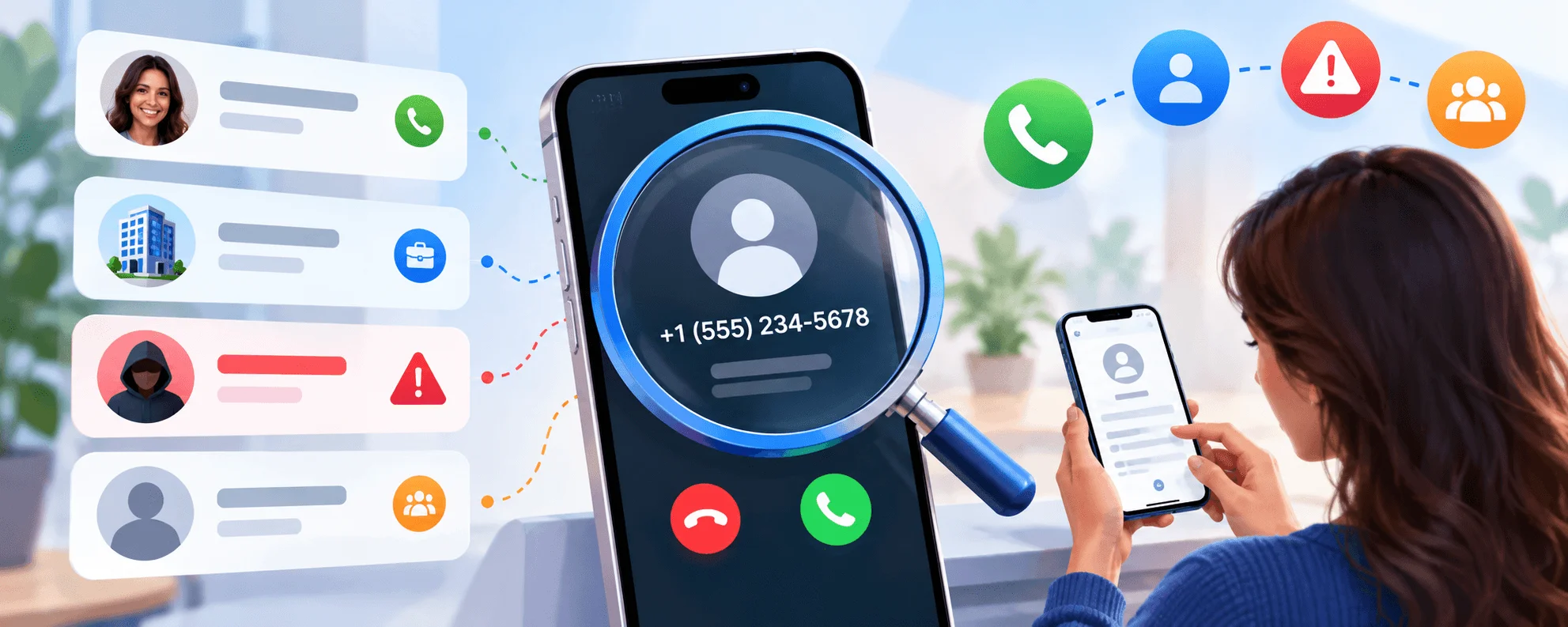
Now, you might be wondering — beyond just curiosity, why does this matter?
Turns out, there's a real, practical reason this has become one of the most searched consumer tools on the internet. It's not just nosiness. It's self-protection.
As Whatismyipaddress.com explains, reverse phone lookups have become more useful as spoofed calls and scam calls have increased. Scammers frequently use VoIP numbers (Voice over Internet Protocol) to mask their real identity or location. Running a quick lookup before answering — or before calling back — helps you confirm whether the number is legit.
Top Reasons People Run a Lookup
Identifying an unknown number before answering
Checking whether a call is a potential scam number
Following up on a missed call from a business number
Verifying a lead in sales prospecting
Confirming identity before a first meetup (dating, marketplace sales, etc.)
On the business side, Ringy notes that commercial-grade lookup tools are built for a totally different purpose — handling volume, integrating with a CRM, and validating inbound leads before a sales rep ever picks up the phone. That's a far cry from a one-off personal search, but it's the same underlying mechanic.
Related: scam callers often pair phone spoofing with other digital threats — if you want to understand the bigger picture, see what a keylogger is and how it's used to steal personal data.
Step-by-Step: How to Run a Phone Number Lookup
Okay, let's get practical. Here's exactly how I'd walk you through doing this yourself, step by step.
Step 1: Choose Your Tool
First things first — decide whether you want a free or paid service, depending on how detailed you need the results to be. Engadget recommends starting with free tools like Google or Whitepages, and only moving to paid options like Spokeo or BeenVerified if you need more detail.
Step 2: Enter the Phone Number Correctly
Type the full phone number into the search bar — and don't forget the country code if it's needed. This trips people up more than you'd expect.
Step 3: Review What Comes Back
Depending on the platform, you might see the caller's name, general location, phone carrier, or even linked social media profiles.
Step 4: Dig Deeper If Needed
If the free result doesn't cut it, most services offer a paid "advanced search" option. These usually unlock unlisted numbers, cell phone data, and broader background details.
Step 5: Decide What to Do With the Info
Block the number. Ignore it. Call back. Report it as spam. Whatever makes sense once you know who — or what — is actually behind that call.
That's genuinely it. Five steps, and you're done.
The Best Phone Number Lookup Tools Worth Trying (Compared)
I'm not going to pretend every tool out there is created equal, because they're not.
Based on independent testing from MoneyPantry and other sources, here's how the top options stack up side by side:
Tool | Free/Paid | Starting Price | Best For | Key Feature |
|---|---|---|---|---|
Truecaller | Free (paid tier available) | Free | Real-time caller ID & spam blocking | 450M+ user crowdsourced spam database |
Whitepages | Free + paid reports | Free basic search | U.S. residential numbers | Data on 250M+ people in the U.S. |
NumLookup | Free | Free | Quick, no-frills checks | Instant name/carrier lookup |
TruthFinder | Paid | Subscription-based | Full background reports | Dark web monitoring included |
Searchbug | Pay-per-result | $1.95/lookup | One-off, no-subscription searches | Pay only when data is found |
ZoomInfo / Cognism | Paid (B2B) | Enterprise pricing | Sales & lead verification | Verified direct dials + company data |
Which One Should You Actually Pick?
Just want a quick name? Truecaller or NumLookup — free and fast.
Need a deeper background report? TruthFinder or Whitepages' paid tier.
Don't want a subscription? Searchbug's pay-per-result model.
Running B2B outreach? ZoomInfo or Cognism for verified, CRM-ready data.
Is Phone Number Lookup Legal?
I know — this is probably the question that's been nagging at you this whole time. So let's clear it up.
Generally, yes. According to MoneyPantry, reverse phone lookups are legal in the U.S. because they search public records, not private data. That said, there's a catch you absolutely need to know about.
What You Can't Do With Lookup Results
You cannot legally use the results for anything covered under the Fair Credit Reporting Act (FCRA) — that includes employment screening, tenant screening, or credit decisions. If you're using a lookup tool for those purposes, you need a specifically compliant background check service, not a casual reverse lookup app.
What About TCPA and Privacy Laws?
Here's where it gets a little more nuanced.
A detailed breakdown on LinkedIn explains that the Telephone Consumer Protection Act (TCPA) requires consent before contacting mobile numbers in most cases. Violations can cost up to $1,500 per infraction — which adds up fast if you're doing this at scale.
On top of that, newer regulations like the California Consumer Privacy Act (CCPA) and the Virginia Consumer Data Protection Act (VCDPA) require transparency around how personal data gets collected and used. If a lookup service doesn't clearly disclose its data sources or fails to honor opt-out requests, it's likely running afoul of these laws.
For everyday personal use — figuring out who just called you — you're almost certainly fine. It's really the commercial and bulk-use side of things where compliance actually matters.
Quick Legal Cheat Sheet
✅ Personal, one-off lookups from public records — generally legal
✅ Business use with proper TCPA/GDPR compliance — legal
❌ Using results for employment/credit/tenant decisions — restricted under FCRA
❌ Harassment, stalking, or unauthorized data sharing — illegal regardless of source
Free vs. Paid Phone Number Lookup: Which Should You Use?
Honestly? It depends on what you're trying to accomplish.
If you just want a fast gut-check on a suspicious number, a free reverse phone lookup tool will usually do the trick. You'll typically get a name, general area, and maybe a spam risk score.
But if you need something more thorough — full address history, associated social profiles, criminal records, or relatives — you're going to need a paid subscription. Just go in with clear eyes: a lot of "free" services are really just a paid trial in disguise, so read the fine print before you hand over a credit card number.
Frequently Asked Questions
Is reverse phone lookup free?
Yes, several tools like Truecaller, NumLookup, and Whitepages offer free basic searches. Detailed reports (address history, relatives, social profiles) typically require a paid plan.
Can someone tell if I looked up their number?
No. Reputable reverse phone lookup services run searches anonymously — the person you searched isn't notified, and your search history isn't shared.
Is it legal to use phone number lookup services?
Yes, for personal use. These tools search public records, not private data. The main restriction is under the FCRA — you can't use results for employment, tenant, or credit decisions.
What information can a phone lookup reveal?
Typically a name, location, carrier, and line type (mobile, landline, or VoIP). Paid services may also surface social media profiles, address history, and background records.
Why does a lookup work for one number but not another?
It depends on which data layers that number appears in — carrier records, public records, business directories, or crowdsourced spam reports. A number with little public footprint may return nothing.
Can businesses use reverse phone lookup for sales?
Yes, as long as they comply with TCPA, GDPR, and Do Not Call regulations. Tools like ZoomInfo and Cognism are built specifically for compliant B2B lead verification.
Final Thoughts
At the end of the day, phone number lookup is one of those tools that seems small until you actually need it — and then it becomes genuinely indispensable.
Whether you're trying to dodge a scam call, verify a business lead, or just satisfy your curiosity about who keeps calling from a number you don't recognize, now you know exactly how the process works, which tools are worth using, and — maybe most importantly — where the legal lines sit.
Next time your phone buzzes with an unknown number, you'll know exactly what to do.