A follow up email after interview is a short, professional message sent within 24–48 hours of your interview to thank the interviewer, reaffirm your interest, and reference something specific from your conversation. It's not a formality — 86% of candidates who sent one felt it improved their chances of landing the job, yet a large share of applicants never send one at all.
I'm going to walk you through exactly how to write one that actually gets read, gets remembered, and gets you closer to an offer.
Let's get into it.
Why a Follow-Up Email After an Interview Actually Matters
You might think a thank-you note is just a formality. A nice-to-have.
It's not.
According to Resumeway's guide on interview follow-ups, 86% of candidates who sent a follow-up email felt it improved their chances of landing the job. And according to Zety's research on thank-you emails, 91% of employers like receiving them — yet 57% of candidates don't send one.
Read that again.
More than half the field skips this step entirely. Which means if you send one, you're already standing out from most of the competition.
That's the real value here. It's not about manners for the sake of manners. It's a candidate experience signal. It tells the hiring manager you're organized, you're interested, and you follow through.
And in a close call between two candidates? That thank-you note can genuinely tip the scale.
If you haven't finalized your resume or prepped for common interview questions yet, it's worth circling back to those basics too the follow-up email is the last step in a chain, not a standalone fix.
And if you're also juggling other job-search paperwork around the same time, our letter of recommendation template covers another piece of that puzzle
When to Send Your Interview Follow-Up Email
Timing is everything with this. Send it too late, and it feels like an afterthought. Send it weirdly early, and, well, it's just weird.
Here's the general follow up email timing most career coaches agree on, based on Sprout Blog's post-interview follow-up guide and the University of Kentucky's career office:
Email Type | When to Send | Ideal Length | Purpose | Tone |
|---|---|---|---|---|
Thank-you email | Within 24–48 hours | 150–200 words | Express gratitude, reaffirm interest | Warm, direct |
First follow-up | ~1 week after interview | 100–150 words | Check on status/timeline | Polite, brief |
Second follow-up | ~1 week after first follow-up | 80–120 words | Final status check | Respectful, low-pressure |
Final graceful note | ~2–3 weeks with no response | 60–100 words | Keep door open for future roles | Gracious, no pressure |
If you're worried about forgetting to send it on time, you can draft your thank-you email the moment you get home and use a tool to schedule it in Outlook for early the next morning — useful if your interview runs late in the day.
The pattern across every source is consistent: start prompt, then space follow-ups roughly a week apart, and stop after two attempts.
Pigman Careers puts it plainly — continuing to follow up past that second attempt starts to read as desperate instead of proactive. Nobody wants that.
So respect the silence. If they're interested, they'll come back to you.
Step-by-Step: How to Write a Follow-Up Email After an Interview
Okay, let's actually build one.
Step 1: Nail the Subject Line First
Your subject line is doing more work than you think. Hiring managers are skimming a flooded inbox, and a vague subject line gets buried fast.
The Muse's guide on thank-you email subject lines recommends keeping it obvious. No clickbait, no cleverness. Just clarity.
Good formulas:
"Thank You — [Job Title] Interview"
"Thank You, [Your Name] — [Job Title]"
"Great speaking with you, [Interviewer's Name]"
Frontline Source Group suggests staying under 60 characters and including the words "thank you" plus your name or the job title. That's it. Keep it simple.
Step 2: Open With a Direct, Genuine Thank You
Don't bury the thanks in paragraph two. Lead with it.
Something like:
"Thank you for taking the time to speak with me today about the [Job Title] role. I really enjoyed our conversation."
Short. Direct. No fluff.
Step 3: Reference Something Specific From the Conversation
This is where most people drop the ball. They send a generic template that could've gone to any interviewer for any job.
Don't do that.
Pull out one specific moment — something the interviewer said, a project they mentioned, a challenge the team is facing. This shows you were actually listening, not just waiting for your turn to talk.
Coursera's guide on follow-up emails suggests building on memorable moments from your actual conversation rather than relying purely on a template. It's the difference between "I look forward to hearing from you" and "I look forward to hearing from you, and I'm still thinking about what you said regarding the team's roadmap."
One of those gets remembered. The other doesn't.
Step 4: Briefly Reaffirm Your Fit
You don't need a second cover letter here. One or two sentences is plenty.
Connect something from the discussion to your background. Remind them, gently, why you're the right person for this.
Step 5: Keep It Short — Seriously
According to Resumeway, a solid follow-up email typically runs 3–4 short paragraphs, roughly 150–250 words total.
That's it. Not an essay. Not a re-pitch of your entire resume.
Busy people appreciate brevity. Respect their time and you'll get more of it back.
Step 6: Close With a Clear, Low-Pressure Sign-Off
Not sure how to word your sign-off? Our guide on how to end an email covers professional closing lines that work well here too.
End on something simple:
"Please let me know if there's anything else I can provide. I look forward to hearing about next steps."
Then your name. Your email signature. Done.
Follow-Up Email Templates by Scenario
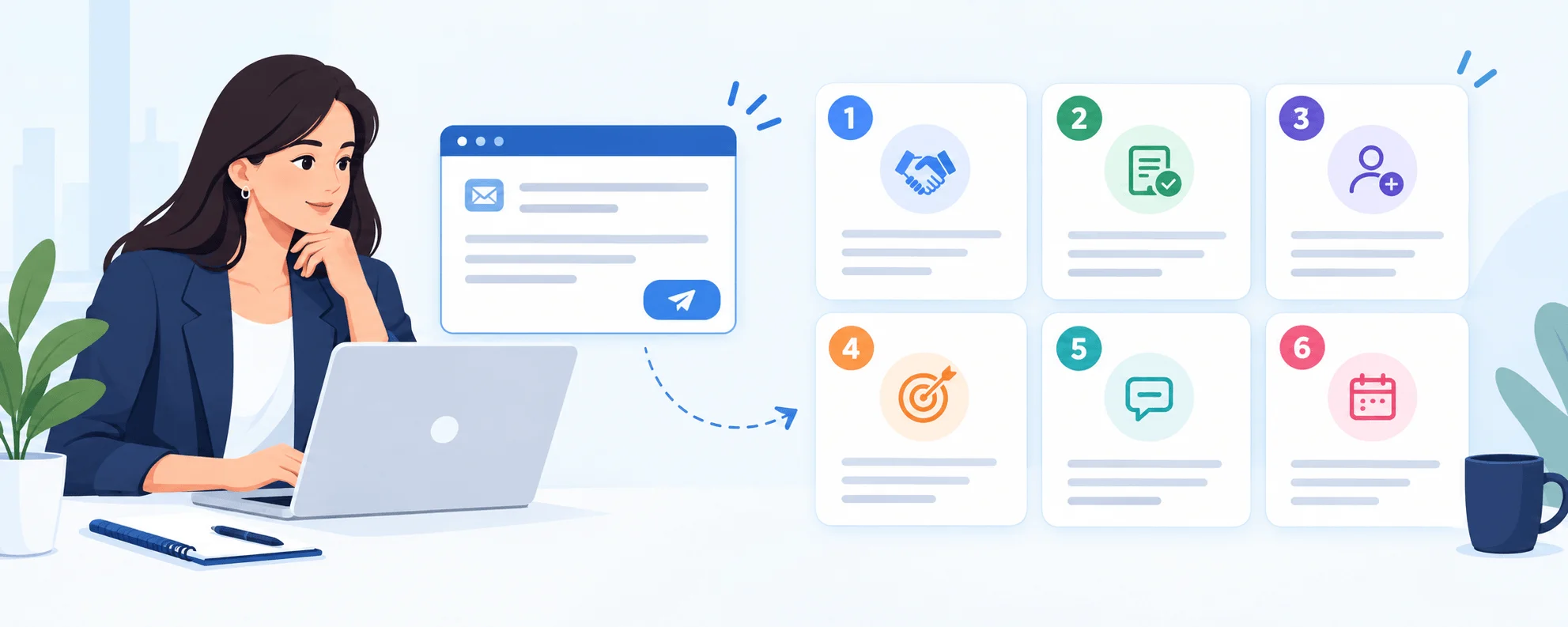
Different situations call for different tones. Let me give you a few.
Scenario 1: The Standard Thank-You Email (Send Within 24–48 Hours)
Subject: Thank You — [Job Title] Interview
Hi [Interviewer's Name],
Thank you for taking the time to speak with me today about the [Job Title] position. I really enjoyed learning more about the team and how [specific project or challenge discussed] fits into the bigger picture.
Our conversation reinforced how much I'd enjoy contributing to this role, particularly around [specific skill/experience relevant to the discussion].
Please don't hesitate to reach out if you need anything further from me. I look forward to hearing about next steps.
Best,
[Your Name]
Scenario 2: Checking In When You Haven't Heard Back (One Week Later)
Subject: Checking In — [Job Title] Interview
Hi [Interviewer's Name],
I hope you're doing well. I wanted to follow up on our conversation from [date] regarding the [Job Title] role. I remain very interested in the opportunity and wanted to check if there's any update on the timeline.
Happy to provide any additional information if that's helpful.
Thanks again for your time,
[Your Name]
Scenario 3: The Final, Graceful Follow-Up (After Two Weeks of Silence)
Subject: Following Up Once More — [Job Title]
Hi [Interviewer's Name],
I wanted to reach out one last time regarding the [Job Title] position. I understand hiring decisions can take time, and I completely respect that.
I remain genuinely interested in the role, and I'd welcome the chance to stay in touch for future opportunities as well.
Wishing you and the team all the best,
[Your Name]
Notice something about all three? None of them are pushy. They're all respectful of the reader's time, while still keeping the door open.
That balance is the whole game.
Follow-Up Emails for Less Common Scenarios
Most guides only cover the standard interview-to-thank-you flow. But a few situations come up often enough that they deserve their own approach.
Following up through a recruiter instead of the hiring manager directly. If a recruiter scheduled your interview, send your thank-you to them first, even if you also send a brief note to the interviewer. Recruiters often relay your message internally, and cutting them out can look like you're going around the process.
Following up after an internal interview. If you're interviewing for a transfer within your current company, keep the tone even more understated — your manager relationship already exists, so the email should read more like a professional check-in than a pitch.
Following up after a panel interview. Send an individual note to each panelist if you have their emails, referencing something distinct from your conversation with each person rather than one copy-pasted message to the group.
Common Mistakes People Make With Interview Follow-Up Emails
Let's talk about what not to do, because avoiding these mistakes is honestly half the battle.
Waiting too long to send it. The longer you wait, the less impact it has. Aim for within a day.
Making it generic. If your email could be copy-pasted for any interview at any company, it's not doing its job. Specificity is what makes it memorable.
Writing a novel. Nobody wants to read 500 words from a job candidate. Trim it down.
Following up too aggressively. Multiple emails within days of each other reads as anxious, not enthusiastic. Give it space.
Forgetting to proofread. A thank-you email with typos undercuts the entire point of sending it in the first place. Read it twice before hitting send.
Sending it to the wrong person. Double-check you have the correct name and correct spelling of your interviewer's name. Small detail, big impression.
What If You Don't Hear Back at All?
This happens more than anyone likes to admit. Interview ghosting is unfortunately common, and it usually has nothing to do with how well you interviewed.
Companies get busy. Priorities shift internally. Sometimes a role gets paused entirely without candidates ever being told.
If you've sent your thank-you email, followed up once, and followed up a second time with still no response — it's reasonable to assume the process has moved on without you.
At that point, the best move is to focus your energy elsewhere. Keep applying. Keep interviewing. And if you have a networking email after interview you'd like to send later down the line — reconnecting for future openings — that's totally fair game, even months later.
Frequently Asked Questions
How soon should I send a follow-up email after an interview?
Within 24–48 hours, while the conversation is still fresh for both of you.
What should the subject line say?
Keep it clear — include "thank you," the job title, or your name. Skip anything clever or vague.
How long should the email be?
Short. Around 150–250 words, split across 3–4 tight paragraphs.
Should I follow up more than once?
Yes, but space it out — roughly a week between each one, and stop after two follow-ups if there's still no response.
Is it okay to follow up after a phone or video interview too?
Absolutely. The same post-interview email etiquette applies regardless of the interview format.
Should I follow up through a recruiter or the hiring manager?
If a recruiter arranged your interview, send them a note too, even if you also email the hiring manager directly.
Final Thoughts
Here's what it comes down to.
A great follow up email after interview isn't about saying the "perfect" thing. It's about being timely, being specific, and being brief. That combination alone puts you ahead of most candidates who skip this step entirely — or who send something so generic it barely registers.
So take the ten minutes. Reference something real from your conversation. Keep it short. Hit send within a day.
It's a small step. But it's one that genuinely moves the needle in a hiring process where every small signal counts.