Quick Answer: To become a content creator, pick a niche you understand, choose one platform, post consistent and useful content, and grow your audience by focusing on both quality and visibility.
I still remember the first time I hit publish on my first piece of content. My hands were shaking, and I had no idea if anyone would even watch it. Over time, I learned that learning how to be a content creator is not about luck. It is about a clear process that anyone can follow if they stay consistent.
In this guide, I am sharing everything I wish someone had told me earlier. From picking a niche to getting paid, this is a simple and honest walkthrough for anyone who wants to start today.
What Does It Mean to Be a Content Creator
A content creator is someone who makes and shares content across platforms like YouTube, Instagram, blogs, or podcasts. This content can be educational, entertaining, or both. The goal is always the same, to give value to an audience that keeps coming back.
Being a content creator today is very different from ten years ago. It is not just about cameras and editing anymore. It is about understanding your audience, solving their problems, and showing up regularly with something useful.
If you are searching for how to be a content creator, you are already one step ahead. Most people never take that first step of asking the right question.
The good news is that you do not need expensive equipment or years of experience to begin. A phone, a clear idea, and a willingness to show up regularly are enough to get started. Everything else, including editing skills and audience building, improves naturally with practice.
Build Your Personal Brand Before You Post
Most beginners jump straight into posting without thinking about their brand, and this usually causes confusion later when their content feels scattered. Your personal brand is simply how people recognize and remember you across every platform.
Start with three basics: a name or handle that fits your niche, a consistent visual style such as the same colors or fonts, and a tone of voice you can maintain comfortably. You do not need a designer for this, a few color choices and one clean font pairing are enough in the beginning.
This small step saves time later. Creators who skip it often end up rebranding halfway through, which can confuse an audience.
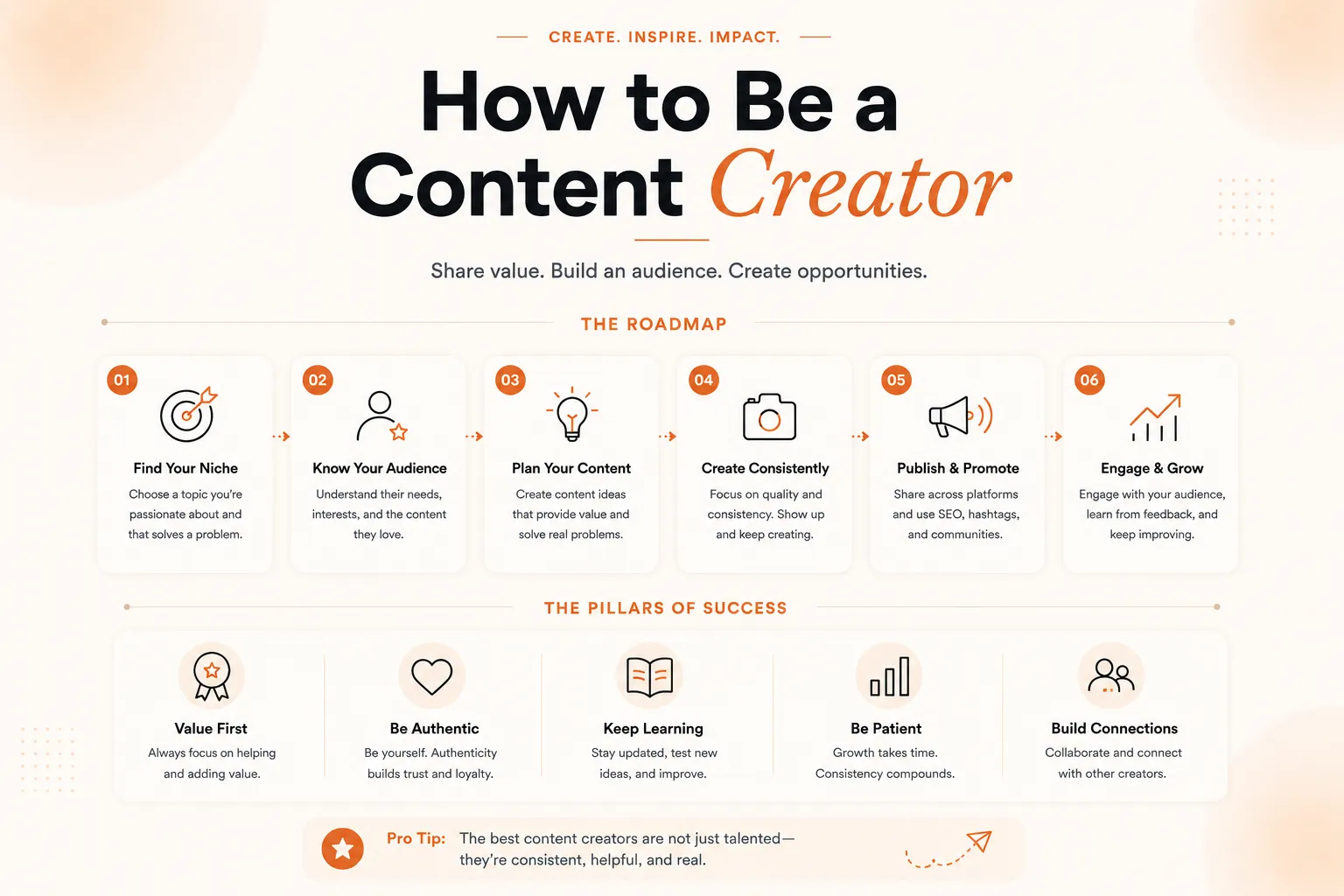
Step by Step: How to Be a Content Creator
Learning how to be a content creator becomes easier when you break it into small steps instead of trying to do everything at once.
1. Choose your niche
Pick something you understand well or genuinely enjoy talking about. It could be fitness, finance, cooking, tech, or even daily life tips. A focused niche helps you build a loyal audience faster than trying to cover everything.
2. Pick one main platform
Do not try to be everywhere at once in the beginning. Choose one platform where your target audience already spends time, and master it before expanding to others.
3. Plan your content
Write down simple ideas every week. A basic content calendar keeps you consistent and removes the stress of thinking what to post every single day.
4. Start creating
Your first videos or posts will not be perfect, and that is completely fine. Progress matters more than perfection when you are learning how to be a content creator.
5. Stay consistent
Consistency beats talent in this field. Creators who post regularly for months almost always outperform those who post occasionally, even if their content is more polished.
6. Engage with your audience
Reply to comments, ask questions, and listen to what your audience wants. This builds trust and turns viewers into loyal followers over time.
Skills You Need Before You Start
You do not need to be an expert in everything before you begin. But a few basic skills make the journey smoother.
Basic writing and communication skills to explain ideas clearly
Simple editing skills using free or affordable tools
Consistency and time management to stay on schedule
Willingness to learn from analytics and audience feedback
Patience, since growth usually takes a few months of steady effort
None of these skills require a big budget. Most successful creators started with just a phone and a genuine desire to help their audience.
Popular Content Formats and Best Platforms
Content Format | Best Platform | Beginner Friendly |
Short videos | Instagram Reels, YouTube Shorts | Yes |
Long form videos | YouTube | Yes |
Written articles | Blogs, Medium | Yes |
Podcasts | Spotify, Apple Podcasts | Moderate |
Photo posts | Instagram, Pinterest | Yes |
Live streams | YouTube, Twitch | Moderate |
This table shows how different formats suit different strengths. If you enjoy writing, blogging is a natural starting point. If you prefer speaking, short videos or podcasts might fit better.
How Content Creators Get Paid
One of the most common questions beginners ask is how content creators actually earn money. There is no single answer, since income usually comes from multiple sources once an audience grows.
Common income sources include brand sponsorships, affiliate marketing, ad revenue from platforms, selling digital products, memberships, and freelance content services. Many creators combine two or three of these once they build a steady audience. For creators who also take on freelance or client projects, online timesheets can make it easier to track billable hours, organize project time, and maintain accurate records for invoicing.
This is also where visibility tools matter. Content only earns money once people actually find it. Using a platform like Backlyncflow to strengthen your content's reach and backlinks can help your blog or channel get discovered faster by the right audience.
To give you a realistic picture, early income is usually modest. Small creators often earn somewhere between fifty and a few hundred dollars per sponsored post, while ad revenue can range from a few dollars per thousand views up to considerably more depending on the platform. Income grows in steps, not all at once, so treat the first few months as the setup phase rather than the payoff phase.
Repurpose One Piece of Content Across Platforms
Something most beginners overlook is that one good idea does not need to stay on one platform. A single topic can become a short video, a carousel post, a blog article, and a few text posts, all from the same core idea.
This approach saves time and multiplies your reach without multiplying your workload. You simply reshape the same idea to fit each format's style and length.
What Are the 4 Types of Content
Understanding content types helps you plan better and avoid repeating the same format every time.
The 4 Main Types of Content
Content Type | Purpose | Example |
Educational | Teaches the audience something useful | How to guides, tutorials |
Entertaining | Keeps the audience engaged and amused | Comedy skits, trends |
Inspirational | Motivates or shares personal stories | Success stories, journeys |
Promotional | Highlights a product or service | Reviews, brand features |
Mixing these four types keeps your content fresh. A creator who only teaches can feel boring, while one who only entertains may lack depth. Balance is what keeps an audience engaged long term.
Tools That Help You Grow Faster
You do not need a huge budget to start, but a few tools make the process much smoother.
A basic editing app like CapCut for videos
Canva for simple graphics and thumbnails
A content calendar app or even a simple spreadsheet
Analytics tools built into each platform to track performance
Backlyncflow to improve your content's online visibility and organic reach
Using the right tools from the start saves time and helps you focus more on the actual content instead of getting stuck on technical details.
Common Mistakes New Creators Make
Knowing what to avoid is just as important as knowing what to do.
Many beginners try to copy others instead of finding their own voice. This usually leads to burnout since it feels forced. Another common mistake is posting inconsistently and then giving up too early, often right before results start showing.
Some creators also ignore their analytics completely. Numbers are not scary, they simply show what your audience actually wants more of. Ignoring feedback and comments is another mistake that slows down growth significantly.
Lastly, many new creators forget about visibility. Great content that nobody finds will not grow. Discovery is just as important as the content itself, and this gap is one that most beginners only notice after months of slow progress.
How to Avoid Burnout as a New Creator
Burnout is one of the least talked about challenges in this field, and it catches a lot of new creators off guard. The pressure to post daily, stay relevant, and keep up with trends can wear you down faster than people expect.
Set a realistic posting schedule from the start instead of an ambitious one you cannot maintain. Two solid posts a week for a year will always beat seven rushed posts a week for one month before quitting.
Legal Basics Every Creator Should Know
This part rarely gets covered, but it matters. If you receive free products, payment, or any perk in exchange for featuring a brand, disclose it clearly to your audience. Most regions require this, and it builds trust rather than damaging it.
Be careful with music, footage, and images you did not create yourself. With AI-generated visuals becoming more common, an AI image detector can also help creators assess whether an image may have been generated or altered using artificial intelligence before they reuse or publish it. Using copyrighted material without permission can get your content removed or demonetized. Stick to royalty free libraries or your own original material whenever possible.
How Long Does It Take, and My Honest Take
This is a fair question, and the answer depends on your niche, platform, and how consistent you stay. Some creators see steady growth within three months, others take closer to a year. What matters more than the timeline is direction, if your views or readers are slowly increasing month over month, you are on the right path even when the numbers still feel small.
I believe anyone can learn how to be a content creator if they stay consistent for three to six months. I have seen creators quit right before their content started gaining traction, simply because they expected faster results. Patience combined with steady posting, plus real focus on getting discovered, is usually what separates the creators who make it from those who give up early. This is where visibility support, like backlinks from Backlyncflow, works alongside your content rather than replacing it.
FAQs
How do content creators get paid?
Content creators earn through brand sponsorships, ad revenue, affiliate marketing, selling digital products, memberships, and freelance content work. Most successful creators combine several of these income streams once their audience grows.
Who is the #1 content creator?
There is no single official ranking since it depends on the platform, niche, and metric used, such as subscribers, views, or engagement. Rankings also change frequently as new creators grow and trends shift.
How to make $10,000 per month on YouTube without making videos?
Some creators earn through channels that use licensed footage, voiceovers, faceless content, or by managing and growing channels for others. This usually requires strong research, editing skills, and consistent output rather than appearing on camera.
What are the 4 types of content?
The four main types of content are educational, entertaining, inspirational, and promotional. Mixing all four keeps an audience engaged and prevents content from feeling repetitive. Most creators find that rotating between these types weekly keeps their content calendar simple while still giving their audience variety to look forward to.
Final Thoughts
Learning how to be a content creator is a journey, not a one time task. Start small, stay consistent, learn from your audience, and improve a little every week.
If you want your content to actually get discovered instead of sitting unseen, give Backlyncflow a try to support your growth and visibility from day one.