Quick answer: content marketing SEO services combine strategic writing with technical and off-page SEO so pages both rank and convert, and the two rarely work well when kept separate.
I've spent enough time inside content and SEO teams to know that most brands treat these as two different departments. One team writes blog posts. Another team chases rankings. They rarely talk to each other, and the output ends up either well written but invisible, or optimized but unreadable. In this guide, I'll break down what this kind of service should actually involve, where most providers quietly fall short, and how to evaluate one properly before you sign a contract.
What Are Content Marketing SEO Services?
This category of service is exactly what it sounds like on paper. You get content strategy, writing, and search optimization delivered as one connected system instead of two disconnected workstreams.
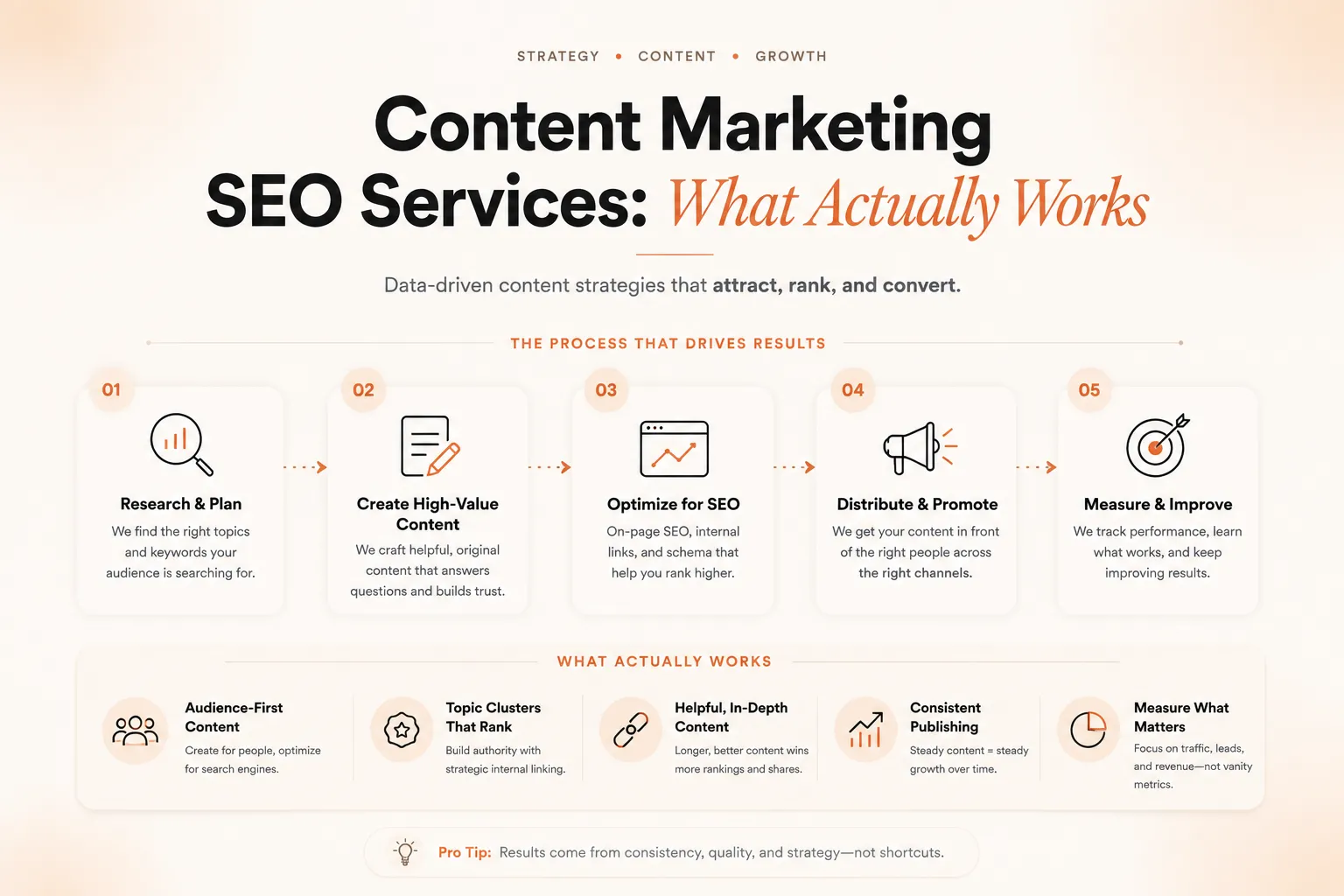
In practice, this means keyword research feeds directly into content briefs before a single word gets written. Page structure is built around search intent, not just word count targets. And the writing itself is designed to earn attention and links, not just sit on a page hoping someone finds it.
The problem is that a lot of agencies sell this as one package but still run it like two separate teams. Writers hit deadlines. Optimization specialists check boxes after the fact. Nothing is actually integrated from the very start, and clients only notice once rankings stall.
Why Content and SEO Work Better Together
Content without SEO is a guessing game. You might write something genuinely useful, but if it isn't structured around real search demand, nobody searching for that topic will ever land on it.
SEO without strong content is just as limited. You can fix every technical issue on a site and still have nothing worth ranking. Search engines reward pages that actually answer the question someone typed in, not just pages that load fast and pass an audit.
This is why a properly built content marketing SEO services model exists as its own category. Google's own guidance stresses helpful, people-first content that demonstrates real expertise, and that's a bar you can only clear when strategy and writing are built together from day one, according to Google's Search Essentials documentation.
What Good Execution Looks Like in Practice
A provider doing this well starts every piece of content with a clear question: who is this for, and what are they trying to accomplish when they search. That question shapes everything downstream.
From there, the brief includes target intent, supporting subtopics, and internal linking opportunities before a writer ever opens a blank document. Nothing gets written blind.
Once published, the work isn't considered finished. Pages get monitored, updated, and strengthened over time based on how they actually perform, not just how they looked on the day they went live.
Even the writing style shifts based on the goal. A comparison page reads differently than a how-to guide, and both read differently from a definition-style page built to answer one specific question quickly and clearly.
Read More: Instagram Profile Picture Viewer: The Complete Guide
Core Components of a Strong Strategy
A real strategy in this space has several moving parts that all need to function together. Here's a breakdown of what should be included, and what each piece is actually responsible for.
Component | What It Does |
Keyword and intent research | Identifies what your audience is searching and why |
Content briefs | Turns research into a clear writing roadmap |
On-page optimization | Structures headings, meta tags, and internal links properly |
Topical authority building | Groups related content so a site owns a subject area |
Link building | Earns third-party signals that support rankings |
Performance tracking | Measures rankings, traffic, and conversions over time |
Skip any one of these and the whole system weakens. I've seen sites with excellent writing and zero backlinks stall for months, and sites with strong backlinks but thin content plateau just as fast.
Content Types That Actually Perform
Not every format deserves the same effort. Long-form guides tend to earn the most organic traffic over time, especially when they answer a question thoroughly instead of skimming the surface.
Comparison and "best of" style pages convert well because they catch people close to a decision. These need to stay accurate and fair, since a page that clearly favors one option without reason tends to lose reader trust fast.
Shorter, definition-style pages matter too, particularly for answer engines and voice search, where a direct, well-structured answer near the top of the page gets pulled into featured snippets and AI-generated summaries.
Case studies and data-backed pieces round things out well, since they give other sites and journalists a genuine reason to reference and link to the page. This is often the content that quietly earns backlinks on its own, without any outreach involved.
Measuring Whether the Strategy Is Working
Rankings alone don't tell the full story. A page can sit on page one and still not bring in a single meaningful lead if the intent behind it was never matched to the offer.
I look at three things together before calling anything a success. Organic traffic trend over time, keyword position movement for priority terms, and whether that traffic actually converts into signups, calls, or sales.
If only one of those three is moving, something in the strategy is incomplete. Traffic without conversions usually points to a mismatch between content and offer. Rankings without traffic usually point to weak titles or thin search demand to begin with.
Mistakes That Quietly Waste Budget
The most common mistake I see is publishing volume for the sake of volume. Ten mediocre articles rarely outperform three genuinely thorough ones built around real search intent.
A close second is ignoring existing pages. Brands pour budget into new content every month while older pages quietly lose rankings from lack of updates, broken links, or outdated information nobody revisited.
The third mistake is skipping authority building entirely and hoping strong writing carries everything on its own. It's the gap that costs the most in the long run, since content quality alone rarely closes the distance against competitors with a real backlink profile behind them.
Common Gaps Most Providers Leave Behind
Most providers cover the writing and on-page side reasonably well. Where they consistently fall short is anything that requires ongoing, hands-on work after the content goes live.
Here's where I see the biggest gaps show up, based on what clients tell me after switching providers.
Common Gap | Why It Hurts Rankings |
No backlink strategy | Content sits without third-party authority signals |
Generic, templated writing | Fails to demonstrate real expertise or experience |
No internal linking plan | Search engines struggle to find or prioritize new pages |
One-time strategy, no iteration | Content stops improving after the first draft |
Vague reporting | Clients can't see what's actually driving results |
The backlink gap is the one I see most often, and it's also the one that quietly kills otherwise good content. You can publish the most helpful article on a topic and still lose to a page with stronger domain authority behind it.
How Backlinks Fit Into the Bigger Picture
Backlinks remain one of the clearest ranking signals search engines use, and no amount of great writing fully replaces them. A well-written page tells search engines what it's about. Backlinks tell search engines that other trustworthy sites vouch for it.
This is exactly where these services tend to stop short. Agencies will happily produce content all day, but building genuine, editorial backlinks takes outreach, relationships, and time most in-house teams simply don't have.
That gap is where BacklynkFlow comes in. Instead of treating link building as an afterthought, this approach focuses specifically on earning editorial backlinks from real, relevant sites through manual outreach, with no PBNs or link farms involved.
How to Choose a Provider
Not every agency offering these services actually delivers an integrated strategy. Here's what I'd personally check before signing anything.
First, ask how content briefs get built. If keyword research isn't feeding directly into the writing process, you're paying for two separate services stitched together and labeled as one.
Second, ask what happens to content after it's published. A real strategy includes internal linking, performance tracking, and updates over time, not a one-and-done delivery with no follow-up.
Third, and most important, ask directly about link building. If backlinks aren't part of the conversation, the strategy is incomplete no matter how good the writing itself happens to be.
Fourth, ask for a straightforward reporting example. If a provider can't show you exactly what moved the needle last month, that's a sign the work is harder to trust than it should be.
Fifth, ask how long they've worked with brands in your specific industry. Generic experience across every niche often means shallow expertise in any single one, and that shows up quickly in how well the content actually resonates with your audience.
Where BacklynkFlow Fits In
The gap most agencies leave open is the same one this service was built to close. Teams can write excellent material, but without earned backlinks behind it, that content competes at a structural disadvantage against pages with stronger authority.
BacklynkFlow works with SaaS, AI, and eCommerce brands specifically, earning links from sites with DR 55 and above through senior-only account management and manual outreach. Every plan includes a 12-month link replacement guarantee and a live reporting dashboard, so nothing is left to guesswork.
If your writing is solid but rankings still feel stuck, the missing piece is usually authority, not more articles. That's the exact problem this kind of link building was built to solve.
read more: SEO Content Marketing Services That Drive Real Growth
Final Thoughts
The strongest results come from treating content and SEO as one connected system, not two departments that occasionally sync up. Strategy, writing, on-page structure, and link building all need to move together.
If you're already investing in content but not seeing the rankings to match, it's worth asking whether backlinks are the missing half of the equation. That's usually where the real gap sits, and it's rarely solved by writing more.
FAQs
What are content marketing SEO services?
They're a combined approach where content strategy, writing, and SEO optimization are handled together instead of as separate services, so content is built to rank from the start.
Do I need backlinks if my content is already good?
Usually yes. Strong content helps you deserve to rank, but backlinks are still a major signal search engines use to decide who actually does.
How long does it take to see results?
Most brands see meaningful movement within 60 to 90 days, though this depends heavily on competition level and whether link building is part of the strategy.
What makes BacklynkFlow different from a typical link building add-on?
It focuses only on manual, editorial outreach with senior account management, backed by a 12-month link replacement guarantee, rather than treating links as a generic upsell.
Is this approach suited to smaller, growing brands?
Yes, particularly SaaS, AI, and eCommerce brands that already publish good content but haven't invested in earning outside authority yet. Starting earlier tends to compound results faster than waiting until competition gets tighter.