There are now thousands of AI tools competing for the same handful of high-intent search terms best AI writing assistant, AI coding tool, AI image generator free. Nearly all of them have decent content. Clean landing pages, comparison tables, FAQ sections, blog posts published on a schedule. And most of them still don't rank, because content quality stopped being the differentiator a long time ago. What separates the AI tools showing up on page one from the hundreds sitting on page four is almost always the same thing: a genuinely strong backlink profile.
This isn't a popular thing to say in 2026, mostly because so much noise has followed Google's own public comments downplaying link volume. But the nuance matters more than the headline. Backlinks haven't died they've gotten harder to fake, more expensive to earn cheaply, and more tightly correlated with the sites that actually deserve to rank. For an AI tool competing in one of the most crowded SaaS categories on the internet right now, understanding that distinction is the difference between a marketing budget that compounds and one that quietly evaporates.
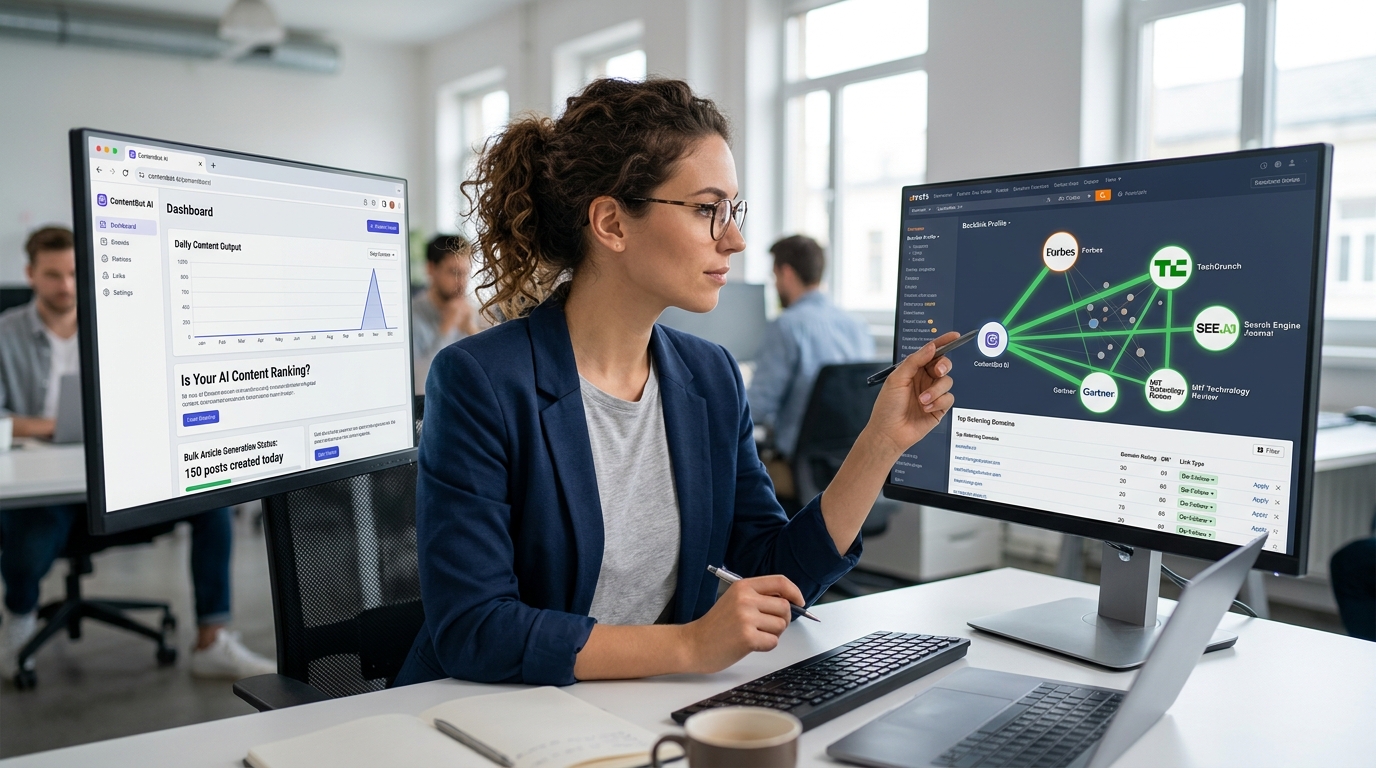
Why Backlinks Still Decide Who Ranks in 2026
Google representatives have been consistent on the record: backlinks remain a top-three ranking factor, and correlation studies keep confirming it the number one result for a competitive query averages roughly 3.8 times more backlinks than positions two through ten combined. For AI tools specifically, over 92% of citations inside Google's AI Overviews come from domains that already carry a real backlink profile, which means the link-building conversation isn't just about classic blue-link rankings anymore. It's about whether AI search systems trust your domain enough to cite you at all.
There's a wrinkle worth addressing directly, because it gets misquoted constantly. Google's Gary Illyes said publicly that links haven't been in the top three ranking signals for some time and that the system needs very few links to rank a page. Taken alone, that sounds like permission to skip link building entirely. Read in context, it's a comment aimed at volume-obsessed tactics the old habit of chasing raw link counts not a eulogy for backlinks as a discipline. The same period saw referring-domain budgets rise across the industry, with a majority of serious SEO teams increasing link spend rather than cutting it, and per-link prices climbing 20 to 40% since 2022 as quality-focused buyers priced out the cheap, bulk end of the market almost entirely.
Then in June 2026, unsealed documents from the Department of Justice's antitrust case against Google added another layer to this: internal materials showed that user engagement and traffic signals now carry more relative weight in Google's ranking system than they did a decade ago, alongside not instead of backlinks. The honest takeaway from all of this isn't backlinks don't matter. It's that backlinks now function as one strong signal among several, and the sites winning in 2026 are the ones building genuine authority across all of them at once rather than optimizing for any single lever in isolation.
What Actually Counts as a Strong Backlink for an AI Tool
Not every link carries equal weight, and understanding what separates a valuable backlink from a wasted one matters more now than it did five years ago, when volume alone could still move the needle.
Relevance beats raw authority. A link from a niche AI-tools blog with a genuinely engaged readership often outperforms a link from an unrelated high-authority domain that happens to mention your product in passing. Google's systems increasingly evaluate the reason a site links to you, not just the domain rating of the linking page.
Context and placement matter as much as the link itself. A backlink embedded naturally inside a genuinely useful comparison paragraph carries more weight than the same link buried in a footer or a sidebar widget nobody reads.
Editorial links beat exchanged links. A link earned because a journalist, blogger, or reviewer independently decided your tool was worth mentioning signals real endorsement. A link placed as part of a reciprocal exchange or a paid placement disclosed nowhere on the page increasingly gets discounted, and in the worst cases, flagged.
Nofollow links still have real value. Google now treats the nofollow attribute as a hint rather than a strict instruction, and a nofollow mention from a major publication still drives referral traffic, brand visibility, and increasingly important the kind of brand-mention signal that large language models rely on when deciding what to cite in an AI-generated answer.
For an AI tool specifically, the links that move the needle most consistently tend to come from three sources: AI tool directories and comparison sites your ideal customer is already browsing, tech and SaaS publications covering your specific category, and genuine digital PR around a real product milestone a funding round, a notable benchmark result, an interesting use case rather than a manufactured news hook.
How to Actually Build Backlinks for an AI Tool
If you're wondering how to build backlinks without falling into either the volume trap or an expensive agency retainer, a few approaches consistently outperform the rest for tools in this specific category.
Submit to AI tool directories, but be selective. Getting listed across a handful of well-maintained, genuinely browsed AI tools directories does two things at once: it earns a relevant backlink, and it puts your product in front of people actively comparing options in your category. The submission process is usually simple a description, a logo, a category tag but the value depends entirely on whether real people browse that directory, not just how many directories you can submit to in an afternoon.
Get featured in comparison and best of articles. Reaching out to writers already covering your category the people publishing best AI writing tools or best AI coding assistant roundups with a genuinely useful pitch (a demo, a unique angle, real usage data) is one of the highest-value link sources available, because the resulting link sits inside exactly the kind of content your prospective customers are already reading.
Publish something worth citing. Original research, benchmark data, or a genuinely useful free tool tends to earn links passively over time, because other writers and creators cite it without needing to be asked. This is the single most durable link-building tactic available, and it's also the hardest to fake at scale which is exactly why it still works.
Do digital PR around real milestones. A funding announcement, a notable customer story, or a genuinely interesting benchmark result gives journalists and bloggers an actual reason to write about you, rather than asking for a favor with nothing newsworthy behind it.
Guest posting, done selectively. Contributing a genuinely useful article to a relevant publication in exchange for a contextual link remains effective when the content adds real value and the publication has a real audience. It stops working and starts risking penalties the moment it becomes a numbers game across low-quality sites that exist purely to sell placements.
Choosing a Link Building Service: What Actually Matters
Plenty of AI tool founders reach a point where manual outreach doesn't scale fast enough, and that's a reasonable moment to consider a dedicated seo link building service. The category is wide, though, and the difference between a service that compounds your rankings and one that quietly damages them comes down to a few concrete distinctions.
White hat vs. black hat is the first filter, and it's non-negotiable. A white hat link building service earns links through genuine outreach, content partnerships, and digital PR the tactics described above, just executed at scale by a team instead of by you personally. Black hat seo link building relies on private blog networks, link farms, or bulk paid placements designed purely to manipulate rankings rather than earn genuine endorsement. It can produce a short-term bump, but Google's spam systems are specifically built to detect exactly this pattern, and the risk of a manual action or a sudden ranking collapse makes it a bad trade for almost any legitimate AI tool trying to build a durable business.
Manual vs. automated outreach. A manual link building service does real human research identifying genuinely relevant sites, personalizing outreach, and building actual relationships with editors and writers. Automated or templated outreach at scale tends to produce a much lower response rate and a noticeably lower-quality link profile, since it's optimizing for volume of emails sent rather than fit.
Outreach quality is the whole ballgame. A strong link building outreach service sometimes marketed as an outreach link building service should be able to show you real examples of the sites they've secured placements on, not just a domain-rating number. Ask specifically whether the outreach targets are relevant to your niche or just whichever sites happen to accept guest posts easily.
Guest posting services deserve extra scrutiny. Legitimate guest posting services place genuinely useful content on relevant, real-audience publications. A red flag worth watching for: services that guarantee placement on an enormous list of sites for a flat fee, since that pattern almost always indicates a network of low-quality sites built specifically to sell links rather than serve readers.
Backlink Building Service Pricing: What to Expect
Costs vary widely, and understanding the current range helps you spot both overpriced retainers and suspiciously cheap offers that usually signal a black hat approach underneath.
Seo link building packages at the low end often marketed as affordable seo link building services typically deliver a modest volume of links per month at a lower average domain authority, which can be a reasonable starting point for an early-stage tool with a limited budget, as long as the links are genuinely earned rather than purchased placements dressed up as outreach.
Mid-tier and premium services charge considerably more per link as quality rises industry data from 2026 shows a majority of serious buyers now paying $300 or more per placement, with a meaningful share spending over $3,000 a month on link acquisition alone. That shift reflects the broader market move away from cheap, bulk link building toward quality-focused campaigns, since Google's systems have gotten substantially better at discounting manipulated link signals.
When comparing seo link building cost across providers, the questions that matter more than the price tag itself: Are the links editorial or paid placements disclosed as sponsored content? Do they come from sites with real, verifiable organic traffic, or from domains that exist purely to sell links? Can the provider show you actual case studies with before-and-after ranking data, not just a promised link count?
For agencies managing multiple client accounts rather than a single product, white label seo link building has become a common way to outsource seo link building execution while keeping client-facing reporting under your own brand a practical option if link building isn't your core service but your clients expect it included in a broader SEO package.
Does Local Link Building Apply to AI Tools?
Most AI tools sell to a global, remote-first audience, which means local seo link building and Google Maps optimization aren't usually the primary focus. That said, the distinction between local seo vs traditional seo link building matters for a specific subset of AI companies: those with a physical office presence, a regional sales team, or a hybrid product serving local businesses directly an AI scheduling tool for local service businesses, for instance, or an AI marketing platform sold specifically to regional agencies.
For that subset, a local link building service links from local business directories, regional chambers of commerce, and local press genuinely helps with location-specific visibility and Google Maps rankings in a way that a purely editorial, topic-relevant link from a national tech publication doesn't replicate. For the large majority of AI SaaS tools without a meaningful local footprint, though, budget is almost always better spent on topically relevant, niche-specific link building rather than local link acquisition that doesn't map to how your actual customers search.
Tools for Tracking and Analyzing Your Backlink Profile
Building links without measuring them is close to flying blind, and a handful of dedicated platforms have become the default standard for this in 2026.
The best link building and backlink analysis tools for SEO typically combine a few core functions: a searchable index of referring domains pointing to your site and your competitors', a toxic-link detector to flag spammy or manipulative links before they trigger a penalty, and a gap analysis feature that surfaces sites linking to competitors but not to you yet often the fastest way to find your next realistic outreach target.
When evaluating seo link building tools and seo link building software, prioritize platforms with a large, frequently refreshed link index over ones with flashier dashboards but thinner underlying data the accuracy of your competitive gap analysis depends entirely on how comprehensive and current that index actually is. The best seo link building software also lets you track anchor text distribution over time, which matters because an unnatural pattern (the exact same commercial keyword used as anchor text across dozens of links) is one of the clearest signals Google's spam systems use to flag manipulative link building.
Backlinks and Your Keyword Ranking Strategy
Link building and keyword strategy aren't separate workstreams the strongest results come from treating them as one system. A sound keyword ranking strategy starts by identifying which terms in your category are genuinely winnable given your current domain authority, then builds a link-acquisition plan specifically around the pages targeting those terms, rather than spreading link-building effort evenly across every page on the site.
In practice, that means prioritizing backlinks toward your highest-intent pages first your core product page, your strongest comparison content, your best original research since those are the pages where additional authority converts most directly into ranking movement and, increasingly, into AI Overview citations. A comparison article several other sites are willing to reference organically does more for your keyword rankings than the same amount of link-building effort spread thin across a dozen lower-priority blog posts.
Google's June 2026 Spam Update and Link Building
Google's global spam update in June 2026 enforced existing spam policies more aggressively, and manipulative link schemes remain squarely inside that enforcement, alongside scaled, low-value content. The update didn't introduce new rules around links specifically Google's spam policies have prohibited link schemes, paid links that pass ranking credit without disclosure, and private blog networks for years but SpamBrain, Google's automated spam-detection system, has gotten measurably better at identifying and quietly neutralizing manipulated link signals the moment it spots them, which means low-quality black hat link building carries more real risk in 2026 than it did even two years ago.
The practical implication for any AI tool investing in link building right now: treat every link building service you consider the way you'd evaluate a business partner, not a vendor selling a commodity. Ask for real examples, verify that placements come from genuinely active sites rather than link farms, and favor a service that can show you organic traffic on the linking domains over one that only shows you a domain-rating score. A backlink profile built this way survives algorithm updates. One built on volume and cheap placements tends to collapse the moment Google's spam systems catch up to the pattern and in 2026, that catch-up window has gotten considerably shorter.
Final Thoughts
Content gets an AI tool into the conversation. Backlinks decide whether it actually gets found in traditional search, and increasingly inside the AI-generated answers a growing share of your prospective customers see first. The tools winning this category in 2026 aren't necessarily the ones with the most blog posts; they're the ones that earned genuine citations from sites their audience already trusts, built deliberately rather than purchased in bulk. Treat link building as a long-term trust-building exercise rather than a line item to check off, and it becomes one of the few SEO investments that keeps compounding well after you stop actively working on it.
Frequently Asked Questions
Do backlinks still matter if AI Overviews are answering most queries directly?
Yes, arguably more than before in one specific way: the large majority of AI Overview citations come from domains with an established backlink profile, so link building now influences whether you get cited in an AI-generated answer, not just whether you rank in traditional blue links.
Is guest posting still a legitimate link-building tactic in 2026?
Yes, as long as it's selective and genuinely valuable a real article on a real publication with an actual audience. It stops being legitimate the moment it becomes a bulk numbers game across low-quality sites built purely to sell placements.
How much should an AI tool budget for link building?
It varies by competitiveness of your category, but industry data shows the market has shifted decisively toward quality a majority of serious buyers now pay $300 or more per placement, with many spending several thousand dollars a month. Early-stage tools can start smaller with a focus on genuinely earned links rather than paid volume.
What's the fastest way to identify black hat seo link building before hiring a service?
Ask for real, verifiable examples of past placements, not just a promised link count or domain-rating average. Guaranteed placement across an enormous list of sites for a flat monthly fee is one of the clearest warning signs.
Does local link building matter for a purely digital AI SaaS product?
Generally no, unless the product has a genuine regional or local-business customer base. Most AI tools are better served by topically relevant, niche-specific link building than local link acquisition.