In today’s digital world, competition for visibility on search engines is stronger than ever. Businesses are constantly trying to improve rankings and attract more organic traffic. However, not all strategies are safe or sustainable. White Hat SEO focuses on ethical, long-term, and user-focused strategies that follow search engine guidelines. Instead of trying to manipulate algorithms, it builds real value for users. We will explore proven SEO best practices, modern white hat SEO Techniques, and actionable strategies that help improve rankings safely and sustainably.
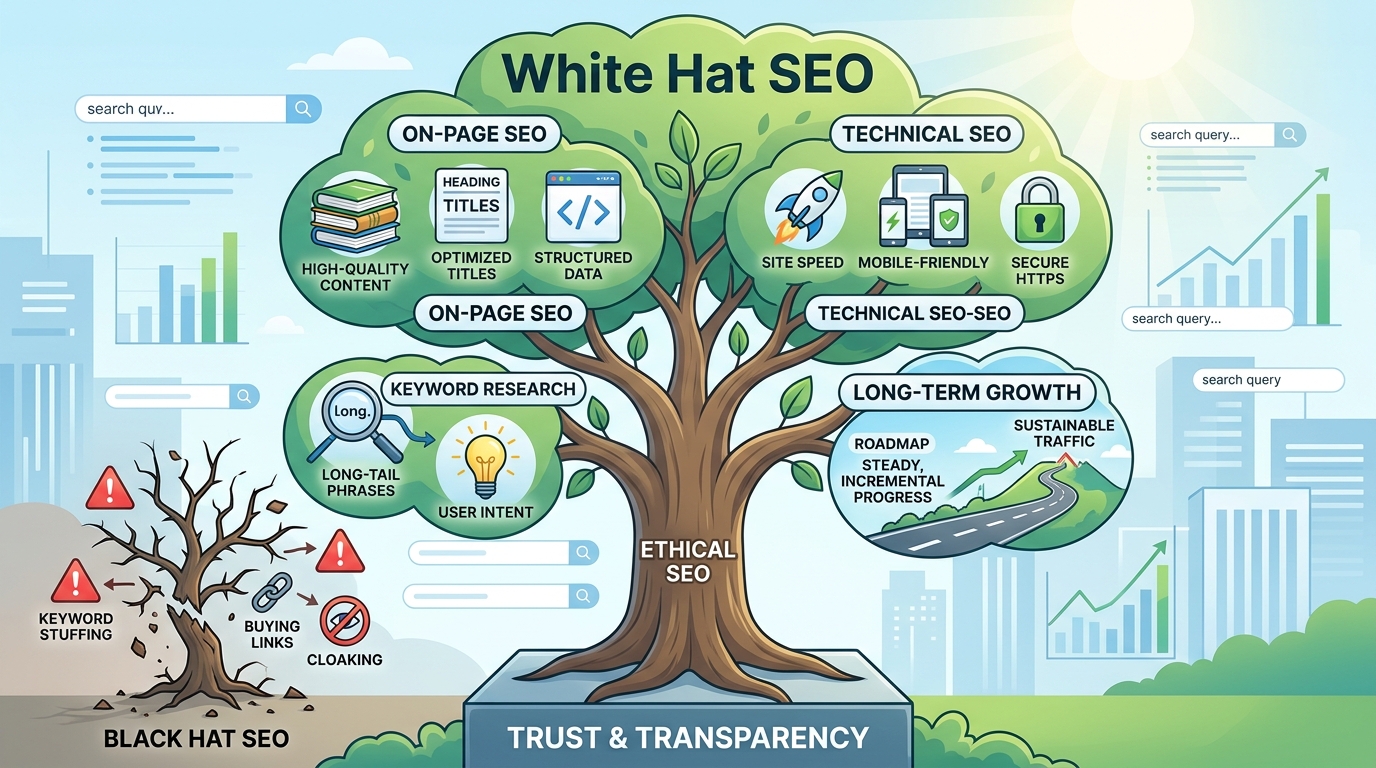
1. Understanding White Hat SEO Techniques
White Hat SEO Techniques refer to ethical optimization methods that align with Google’s guidelines. These techniques focus on improving website quality rather than tricking search engines.
Key characteristics include:
Focus on user experience
High-quality content creation
Natural backlink building
Transparent optimization methods
Long-term SEO growth
Unlike black hat tactics, white hat methods create stable and long-lasting results.
2. Importance of SEO Best Practices in Modern Ranking
Following SEO best practices is essential for building a strong online presence.
Search engines now prioritize:
Content relevance
User satisfaction
Website authority
Page experience
By applying proper SEO practices, businesses can achieve consistent rankings and avoid penalties.
Some core best practices include:
Optimizing page structure
Using relevant keywords naturally
Improving site speed
Creating mobile-friendly websites
3. Keyword Research Strategies for Better Visibility
Strong keyword research strategies form the foundation of successful SEO.
Instead of guessing keywords, businesses analyze:
Search volume
Competition level
User intent
Long-tail opportunities
Effective keyword planning ensures content reaches the right audience.White hat SEO uses keywords naturally within content instead of stuffing them.
4. On-Page SEO Optimization for Higher Rankings
On-page SEO optimization focuses on improving elements within a webpage.
Important factors include:
Title tags and meta descriptions
Header structure (H1, H2, H3)
Internal linking
Image optimization
Content readability
Well-optimized pages help search engines understand content clearly and rank it appropriately.
5. Technical SEO Improvements for Website Performance
Technical SEO improvements ensure that websites are easy for search engines to crawl and index.
Key areas include:
Website speed optimization
Mobile responsiveness
XML sitemap creation
Fixing broken links
Secure HTTPS implementation
A technically strong website improves both ranking and user experience.
6. High-Quality Content Creation for Long-Term Success
High-quality content creation is the backbone of White Hat SEO.
Search engines prioritize content that:
Solves user problems
Provides in-depth information
Is original and valuable
Keeps users engaged
Content should be written for humans first, then optimized for search engines.This approach ensures natural SEO optimization and long-term visibility.
7. White Hat Link Building for Authority Growth
White hat link building focuses on earning backlinks naturally from trusted websites.
Effective methods include:
Guest posting
Digital PR
Industry collaborations
High-value content publishing
Resource link building
Quality backlinks improve domain authority and organic rankings without risking penalties.
8. User Experience Optimization for Better Engagement
User experience optimization plays a major role in SEO success.
Google evaluates how users interact with websites, including:
Bounce rate
Time on page
Navigation ease
Mobile usability
A well-designed website improves engagement and increases conversions.
Simple UX improvements include:
Clear navigation menus
Fast loading pages
Clean design layout
Easy-to-read content
9. Long-Term SEO Growth with Ethical Strategies
Long-term SEO growth is only possible through consistent and ethical practices.
Instead of short-term tricks, white hat SEO builds:
Trust
Authority
Sustainable traffic
Brand credibility
Over time, this leads to stable organic rankings and better ROI.
10. Natural SEO Optimization for Sustainable Rankings
Natural SEO optimization means optimizing content in a way that feels organic and user-friendly.
This includes:
Writing naturally without keyword stuffing
Using synonyms and related terms
Structuring content for readability
Focusing on search intent
Search engines reward websites that prioritize natural user-focused optimization.
Key Benefits of White Hat SEO Techniques
Implementing ethical SEO strategies offers long-term advantages:
Stable organic search rankings
Increased website traffic
Higher brand trust
Better conversion rates
Lower risk of penalties
Strong online authority
White hat SEO ensures sustainable digital success.
Common Mistakes to Avoid in SEO
Many websites fail due to poor SEO practices such as:
Keyword stuffing
Buying low-quality backlinks
Duplicate content
Ignoring mobile optimization
Weak content structure
Avoiding these mistakes helps maintain long-term ranking stability.
Future of SEO and Ethical Optimization
The future of SEO is shifting toward:
AI-driven search algorithms
User intent-based ranking
Semantic search optimization
Content quality evaluation
Search engines are becoming smarter, meaning White Hat SEO Techniques will become even more important.
Conclusion
White Hat SEO Techniques remain the most reliable way to achieve sustainable online growth.By focusing on SEO best practices, on-page SEO optimization, technical SEO improvements, high-quality content creation, and white hat link building, businesses can achieve long-term success.Instead of chasing quick wins, ethical SEO builds a strong foundation that continues to generate organic traffic over time.In a competitive digital landscape, the smartest strategy is not shortcuts, but consistency, quality, and trust.
FAQs
1. What are White Hat SEO Techniques?
White Hat SEO Techniques are ethical SEO strategies that follow search engine guidelines and focus on long-term organic growth.
2. Why are SEO best practices important?
SEO best practices ensure websites are optimized correctly for search engines and users, improving rankings and visibility.
3. What is on-page SEO optimization?
On-page SEO optimization involves improving elements within a webpage such as titles, headings, content, and images.
4. What are technical SEO improvements?
Technical SEO improvements include optimizing website speed, mobile usability, indexing, and overall site structure.
5. How does keyword research help SEO?
Keyword research strategies help identify what users are searching for, allowing content to target the right audience.
6. What is white hat link building?
White hat link building is the process of earning backlinks naturally from trusted and relevant websites.
7. Why is high-quality content important?
High-quality content creation improves user engagement, builds authority, and increases organic rankings.
8. What is natural SEO optimization?
Natural SEO optimization means using keywords and structure in a way that feels organic and user-friendly.
9. How does user experience affect SEO?
Better user experience leads to lower bounce rates and higher engagement, which improves search rankings.
10. What is long-term SEO growth?
Long-term SEO growth is achieved through consistent, ethical strategies that build sustainable organic traffic over time.